
Budget Winter Event Florals at $350–$700 Per Guest for Luxury Planners

The strongest winter event floral strategy centers seasonal texture heroes, amaryllis, hellebore, ranunculus, and anemone, paired with evergreen structure like noble fir or eucalyptus, rather than forcing peak summer blooms into a season that was never meant to hold them. This piece covers sourcing timelines, realistic budgets, and the design ideas that turn cold weather into an editorial asset for hosts and their production teams.
TL;DR:
Winter floral arrangements should focus on texture and structure, using flowers like hellebore and greenery such as noble fir to maximize seasonal availability and visual impact.
Out-of-season flowers like peonies significantly raise costs, with premiums of 20 to 40 percent, making it essential to confirm stem origin and quality with your florist beforehand.
Low winter light favors restrained, bold palettes, with rich jewel tones and metallic accents creating depth, while matte vessels help absorb light in drafty venues.
A full-service production team is recommended to manage sourcing, cold-chain logistics, structural engineering, and event maintenance, ensuring floral integrity and reducing host coordination.
Lead times of at least three weeks are crucial for winter floral orders to account for weather delays and demand, especially when sourcing fragile or out-of-season blooms.
Table of Contents
The best winter flowers and foliage to request from your florist
Winter palettes and the design trends shaping upscale events
Sourcing, seasonality, and what to budget for winter florals
Keeping winter arrangements protected from setup to last call
Bring in a full-service team for your winter floral production
The best winter flowers and foliage to request from your florist
A well-briefed florist works from a hierarchy: focal blooms that carry the visual weight, secondary flowers that add movement, and greenery that builds structure. Winter gives you an unusually rich focal category, and knowing each flower’s role prevents last-minute substitutions that feel improvised rather than intentional.
Amaryllis anchors large arrangements with its scale and saturated color, and it holds up beautifully in cooler venues. Hellebore functions as the season’s true texture hero: its papery, downturned blooms photograph well in low light and read as unmistakably winter, often at a lower cost than forcing peonies out of season, according to Fiory’s seasonal guide. Ranunculus and anemone bring movement and a hand-painted quality, with ranunculus offering a dependable, cost-conscious stand-in for peonies. Garden roses, greenhouse-grown for winter availability, and forced tulips round out the softer palette, while paperwhite narcissus contributes fragrance and a pale, luminous note. Hypericum berries and silver dollar eucalyptus add texture without competing for attention, and noble fir, cedar, and Italian ruscus supply the structural greenery that carries a design’s silhouette.
Amaryllis: focal, best in larger installations, wholesale runs roughly $3.50 to $5.00 per stem according to Fiory’s guide.
Hellebore: secondary texture hero, wholesale around $2.50 to $4.00 per stem, pairs naturally with evergreen branches.
Ranunculus: focal or secondary, vase life of about 5 to 10 days at peak according to Lacy Bird’s seasonal guide, a reliable peony substitute.
Anemone: secondary, delicate and short-lived, best used in arrangements assembled close to the event.
Garden rose (greenhouse): focal, softer and more expensive than standard roses, a graceful stand-in for out-of-season peonies.
Forced tulip: secondary, clean lines, performs well in cooler rooms.
Paperwhite narcissus: accent, fragrant, best kept away from direct heat sources.
Hypericum berries: filler, adds texture and color without bulk.
Silver dollar eucalyptus: greenery, softens structural branches.
Noble fir, cedar: structural greenery, wholesale roughly $1.00 to $2.00 per stem according to Fiory’s guide.
Italian ruscus: greenery, dense and glossy, good for garlands and base work.
For scale, a bridal bouquet generally runs 12 to 18 stems, while a standing centerpiece needs 9 to 15 depending on vessel height and table size.
Winter palettes and the design trends shaping upscale events
Low winter light rewards restraint. Rich, saturated colors and deliberate negative space photograph with more depth than dense, bright arrangements, and that shift is part of a broader move toward experiential, editorial floristry that treats each installation like a considered composition rather than a filler of empty tables.
Moody jewel tones: amaryllis in burgundy or plum, hellebore, and dark ruscus for a cinematic, low-light palette.
Winter white and warm metallics: paperwhite narcissus, white ranunculus, and eucalyptus against brushed gold or antique brass vessels.
Soft neutrals and evergreen texture: garden roses in blush or ivory grounded by cedar and noble fir for a quieter, tactile look.
Deep burgundy and antique gold: garden rose, hypericum berries, and ruscus for a formal, gallery-like table.
Pro Tip: Matte ceramic and unlacquered brass vessels absorb winter light rather than bouncing it, and heavier ribbon weights hold their shape in cold, drafty venues where thin silk tends to go limp.
Where each arrangement style earns its place at your event
Different formats serve different jobs, and a production team should scale each one to the room and the camera before it scales it to the guest list.
Bridal bouquet: amaryllis or garden rose as focal with ranunculus and anemone woven through, hand-tied and compact enough to travel without bruising petals.
Bridesmaid posies: smaller echoes of the bridal bouquet, usually hellebore-forward, easy to assemble in volume without losing cohesion.
Long-table evergreen garland: cedar and Italian ruscus as the base, with amaryllis or hypericum tucked in at intervals; built on a foam-free wire armature for a fixture that reads as pure hospitality.
Sculptural branch installation: bare or lit birch and fir branches anchored in weighted, hidden vessels, ideal for entryways and photo moments since verticality reads dramatically on camera.
Ceremony arch: a structural frame wrapped in cedar or ruscus, punctuated with amaryllis and garden rose, requiring secure anchoring and on-site hydration for anything standing more than a few hours.
Small table centerpiece: a tight cluster of ranunculus, hellebore, and eucalyptus in a low matte vessel, quick to produce at scale for large guest counts.
Installations built for the camera, arches and vertical branch work, deserve the biggest share of the design budget, while garlands and table work carry the moment-to-moment guest experience.
Sourcing, seasonality, and what to budget for winter florals
Amaryllis, hellebore, ranunculus, anemone, garden roses, forced tulips, paperwhites, and evergreens are all reliably available through winter, according to Fiory’s seasonal guide. Peonies are not, and importing them, along with any other out-of-season specialty bloom, tends to raise floral costs meaningfully, since Wedding Pros Rated puts the premium for out-of-season specialty flowers at 20 to 40% over in-season pricing.
Confirm stem grade and country of origin with your florist before locking a design.
Ask about heated transport for any wholesale order placed more than a few days ahead.
Request on-site hydration stations for anything assembled the morning of the event.
Build in a contingency supply line for delicate stems like anemone that bruise easily.
Lead time matters more in winter than in any other season. Wedding Pros Rated recommends booking florists well ahead of peak dates and planning at least three weeks of lead time on wholesale orders to account for weather delays and holiday demand.
Bonnie Rae’s own luxury floral budget guidance sets a high-end range per guest for full-service winter production, reflecting design, sourcing, cold-chain logistics, and foam-free mechanics rather than flowers alone. That range gives hosts a realistic starting point before a proposal is even drafted.

Keeping winter arrangements protected from setup to last call
Cold does more damage to florals than heat ever will, and a production team’s cold-chain discipline often determines whether a design survives the day. Stems should never freeze in transit, which means heated trucks and insulated holding areas near the venue rather than a loading dock left open to the weather.
Hold cut flowers in a space kept above freezing but below typical room temperature until the final staging window.
Assign one team member to own hydration and touch-ups through the event, not just the initial build.
Time the final setup as close to guest arrival as the venue allows, especially for anemone and paperwhite.
Request foam-free armatures for anything structural, since reusable mechanics hold up better through long installs and repeated handling.
Pro Tip: Foam-free builds take longer and cost more in labor, so ask your florist to price that time separately rather than folding it into a flat design fee.
Bonnie Rae’s production notes on luxury winter florals
Bonnie Rae, founder of Bonnie, built the company’s floral production practice around the same discipline it brings to catering, staffing, and brand installations for ultra-high net worth and corporate clients. That experience shapes the budget and logistics guidance throughout this piece.
A published range per guest covers design, sourcing, cold-chain handling, foam-free mechanics, and the staffing needed to maintain arrangements through the event.
Hiring a full-service production team reduces the risk that comes with complex winter installs, since sourcing contingencies and on-site engineering are managed by one accountable party rather than several disconnected vendors.
Further design context appears on the Bonnie blog, including the brand’s take on luxury event trends shaping hospitality in 2026.
Winter is a design advantage, not a limitation
Winter’s low light and quiet palette invite restraint, and restraint is where vibrant food presentations and luxury floristry actually live. Book your production team early and let mood, not abundance, lead the design.
— Bonnie Rae
Bring in a full-service team for your winter floral production
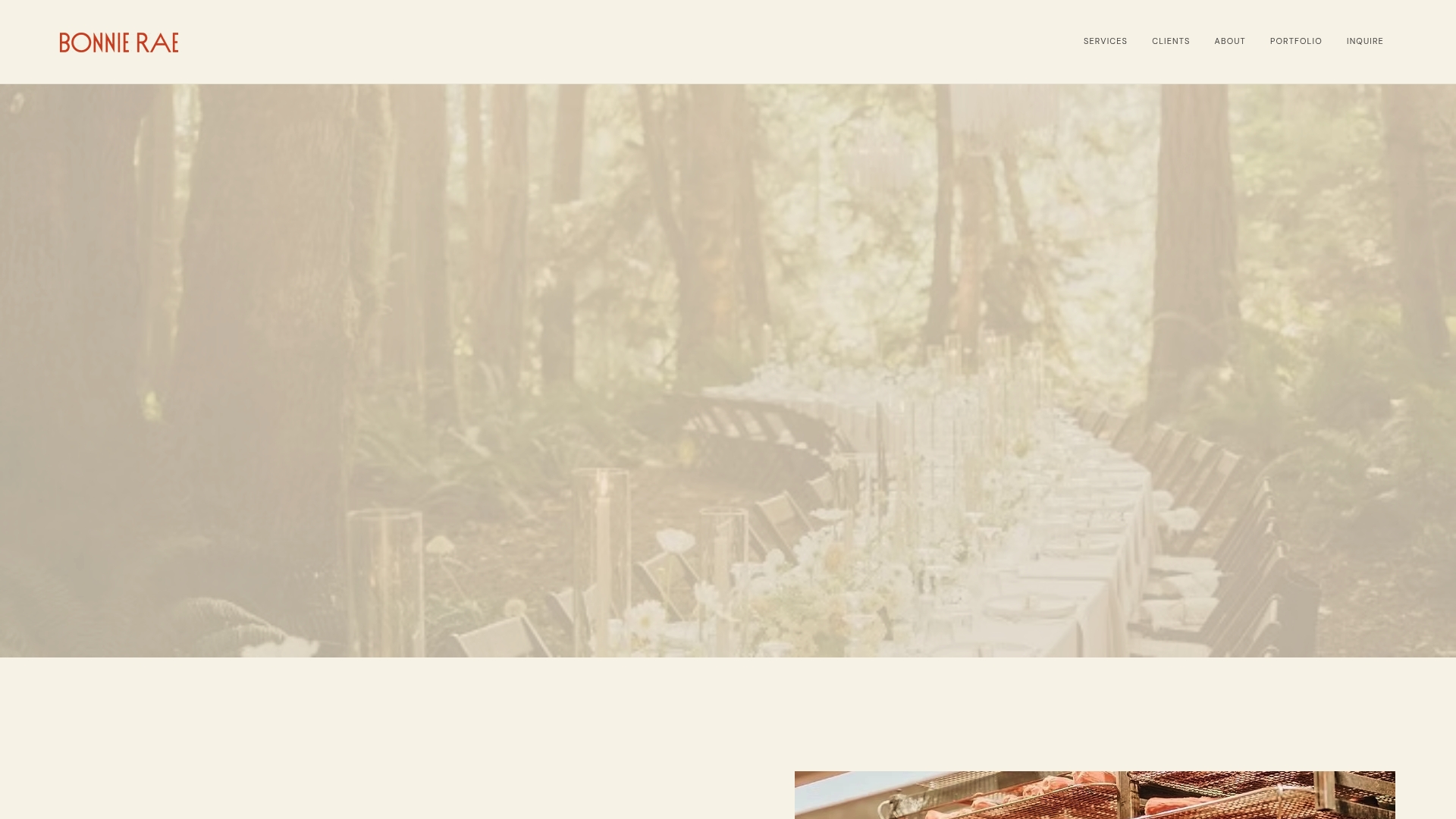
Sourcing amaryllis and hellebore through a heated cold chain, engineering a foam-free ceremony arch, and staffing someone to maintain hydration through a six-hour reception are three different jobs, and most hosts do not want to manage all three separately. A full event production team can bring private events and catering, professional sports concierge, brand installations, staffing, and bar and sommelier programs under one accountable team, built for ultra-high net worth individuals, corporate clients, athletes, and cultural icons who want a single point of contact rather than a list of vendors to coordinate. For a bespoke proposal built around your venue, guest count, and season, visit Bonnie to start the conversation.
Sources
FAQ
What are some good floral arrangements for winter?
Bridal bouquets and centerpieces built around amaryllis, hellebore, ranunculus, and anemone perform especially well, paired with evergreen greenery like noble fir or Italian ruscus for structure. These choices hold up in cold venues and photograph richly under low winter light.
What is the 3:5:8 flower rule?
Definitions vary across the floral industry, but a common version uses it as a proportion guide for mixed arrangements, roughly three focal blooms, five secondary flowers, and eight stems of greenery or filler. It is a starting ratio rather than a fixed formula, and florists often adjust it to the vessel and venue.
Are florals out for 2026?
Florals remain a central part of luxury event design going into 2026, with the trend moving toward richer textures, saturated jewel tones, and more restrained, editorial staging rather than dense, oversized arrangements. The shift is in style, not in whether flowers are used at all.
What florals are in season in December?
Amaryllis, hellebore, ranunculus, anemone, garden roses, forced tulips, paperwhite narcissus, and evergreens like cedar and fir are all commonly available in December, according to Fiory’s seasonal guide. Peonies are not in season and typically require importing at a premium if a client requests them.
Recommended
Comments