
3–4 Hour Pregame Fuel Plan for U.S. Athletes and Hospitality
For most U.S. athletes, the winning approach is straightforward: top up glycogen the night before with a carb-forward dinner, eat a balanced, low-fiber meal 3 to 4 hours before competition, add a quick-carb snack 30 to 60 minutes before start, and follow a simple hydration schedule throughout. This sequence draws on the 4Ps performance nutrition framework and NATA hydration guidance, and similar hospitality programs can incorporate this rhythm into athlete nutrition. Test the plan in training first. Game day is not the time to discover a new food disagrees with you.
TL;DR:
Athletes should aim for 6 to 10 grams of carbohydrate per kilogram of body weight the night before competition to replenish glycogen stores effectively.
Eating 1 to 3 grams of carbohydrate and 0.3 to 0.5 grams of protein per kilogram of body weight 3 to 4 hours before the event optimizes fuel without causing discomfort.
Consuming a quick-digesting carbohydrate snack like a banana or sports gel 30 to 60 minutes before start provides immediate energy without GI issues.
Hydration involves drinking 16 to 24 fluid ounces 2 to 3 hours before, then a smaller top-up closer to start, using fluids tested during training.
Avoid high-fat, high-fiber, spicy, or unfamiliar foods immediately before or early during competition to prevent cramping and gastrointestinal distress.
Table of Contents
Night Before: Building Glycogen, Hydrating, and Protecting Sleep
Muscle glycogen stores rebuild over 24 to 48 hours, and a carbohydrate-forward dinner the night before competition is your best lever for topping the tank. The 4Ps framework recommends 6 to 10 grams of carbohydrate per kilogram of body weight across the 24 to 36 hours leading into competition, which for a 150-pound athlete lands in the high hundreds of grams spread across meals and snacks.
Practical dinner choices that hit that target without overloading the stomach:
A pasta bowl with lean protein and a light sauce
Grilled chicken over white rice with roasted vegetables
A turkey sandwich on white bread with fruit on the side
Hydrate steadily through the evening rather than chugging water right before bed, and go easy on caffeine and skip alcohol entirely, since both interfere with the deep sleep that supports recovery. For athletes traveling for tournaments, calling ahead to a hotel restaurant or requesting a simple starch-and-protein plate at check-in avoids the scramble of hunting for familiar food after a late flight.
What Should Athletes Eat 3 to 4 Hours Before a Game?
This window is where the real fueling happens, and the targets are specific enough to calculate on your phone in the locker room. Johns Hopkins Medicine and the 4Ps framework both point to 1 to 3 grams of carbohydrate per kilogram of body weight, paired with 0.3 to 0.5 grams of protein per kilogram, eaten 3 to 4 hours before competition.
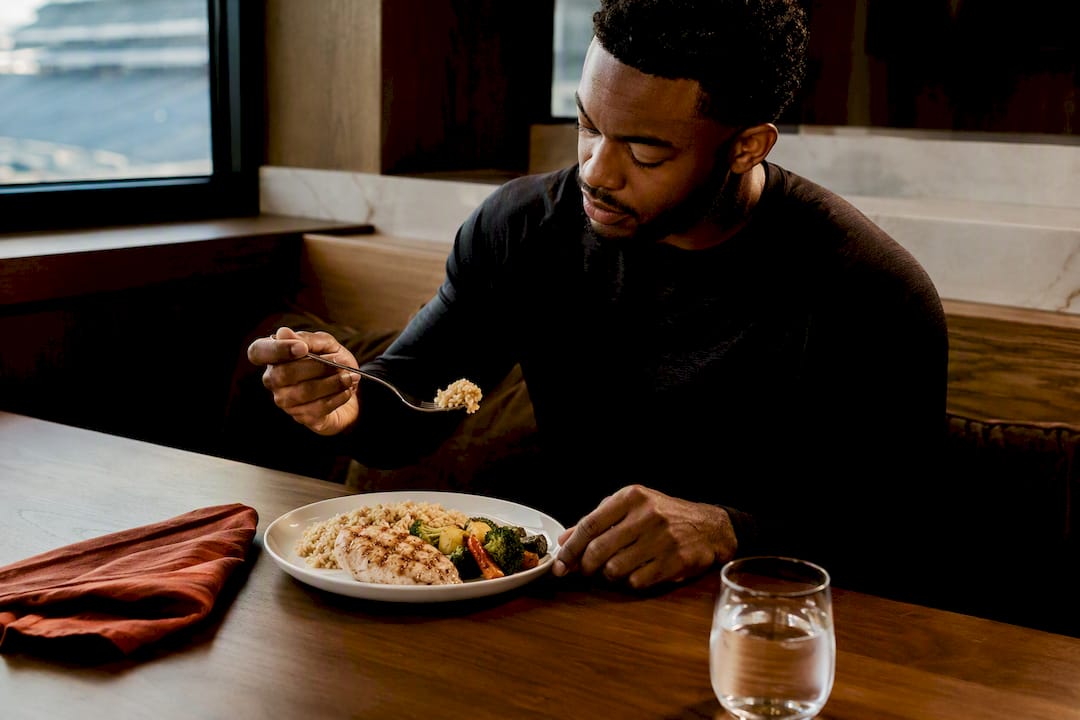
For a 165-pound (75 kg) athlete, that translates to a moderate range of carbohydrate and protein intake appropriate for fueling. Keep fat and fiber low here. Both slow digestion and can leave an athlete feeling heavy at tip-off.
Meals that check every box:
Grilled chicken breast with white rice and steamed vegetables
A bagel with peanut butter and a banana
Scrambled eggs on white toast with a small orange
Weigh your food mentally rather than eyeballing it. A palm-sized chicken breast and a cupped handful of rice gets most athletes into the right range without needing a kitchen scale on game day.
Pro Tip: Never trial a new pre-game meal on competition day. Test every meal, snack, and hydration plan during a practice week first, since the gut can be trained to tolerate specific foods and volumes, and that training only works if you repeat it.
Eating 1 to 2 Hours Before Competition
Some schedules do not allow a full meal 3 to 4 hours out, whether because of an early tip-off, a weigh-in, or a tournament bracket that keeps shifting. When that happens, scale down and lighten up rather than skipping the meal entirely.
Choose a small sandwich or a smoothie over a full plate. Both digest faster and lower the risk of cramping.
Favor low-fat, low-fiber options like toast with jam, plain yogurt with a little granola, or a banana smoothie with a scoop of protein.
Stick to fluids you have already practiced with. A diluted sports drink or a familiar smoothie recipe beats anything new.
Confirm hydration status. If urine is pale yellow and you feel no thirst, you are close to where you need to be.
Cleveland Clinic’s guidance backs this same pattern: keep the pregame meal itself earlier when possible, and treat anything inside 2 hours as a lighter, carb-focused top-up rather than a real meal.
The 30 to 60 Minute Top-Up Snack
Inside the final hour, the goal shifts entirely to quick-digesting carbohydrate that raises blood glucose without sitting in the stomach. Johns Hopkins specifically calls out this window for small, simple snacks.
A banana or a cup of applesauce
A small handful of pretzels
A sports gel with water
About 30 grams of carbohydrate from any source you have already tested in practice
If nerves have your stomach in knots, or if you know from experience that solid food does not sit well this close to start time, switch to liquids. A diluted sports drink or a light smoothie delivers the same carbohydrate with a far lower chance of GI trouble. Whatever you choose, make it something you have eaten before a practice or scrimmage. This is not the moment to experiment.
Hydration Strategy: Targets, Sports Drinks, and Sweat Rate
Hydration status shapes performance as much as food does, and the numbers here are specific enough to plan around. NATA’s position statement recommends starting competition already well hydrated, with roughly 16 to 24 fluid ounces (500 to 700 mL) consumed 2 to 3 hours before activity, followed by a void, then a smaller top-up of 7 to 10 fluid ounces closer to start.
For events lasting longer than 60 to 90 minutes, a carbohydrate and electrolyte drink in the 3% to 8% concentration range helps sustain both fluid balance and blood glucose. Below that duration, plain water usually covers it.
Weigh yourself before and after a hard training session to estimate your personal sweat rate.
Use that number to plan how much fluid to replace during similarly intense games.
Target staying under a 2% loss of body mass during competition, the threshold NATA links to measurable performance decline.
Losing more than 2% of body mass through sweat during activity is associated with meaningful drops in performance and higher heat-illness risk, according to NATA’s fluid replacement guidance.
At tournament-level hospitality, execution matters as much as the numbers. Chilled drinks, clearly labeled stations separating water from electrolyte mixes, and options for athletes managing diabetes or other conditions all reduce the friction between a good hydration plan and an athlete actually following it.
Foods to Avoid and Smart Swaps
High-fat foods, high-fiber vegetables and whole grains, heavily spiced dishes, and anything from an unfamiliar restaurant all raise the risk of cramping or GI distress right before competition. Athletes with lactose intolerance should also treat dairy as a variable to control, not a given.
Swap brown rice for white rice in the hours before play; less fiber, faster digestion.
Swap a fibrous apple or pear for a banana, which digests more predictably.
Swap a heavy red-meat dish for grilled chicken or fish.
Swap regular milk for a lactose-free option if dairy has ever caused issues.
Every athlete’s tolerance is different, so treat this list as a starting point and adjust around your own known sensitivities. What works for a teammate can still wreck your stomach.
Sample Menus by Event Type and Timing
Different sports call for different fueling shapes, and the U.S. Olympic and Paralympic Committee’s own fueling-for-competition guidance draws a clear line: bigger meals when there is more than 2 hours between efforts, small snacks when there is not.
Endurance events (distance running, triathlon, cycling): oatmeal with banana and honey 3 to 4 hours out; a sports drink and gel in the final 30 minutes.
Team sports (soccer, basketball, football): grilled chicken, white rice, and vegetables 3 to 4 hours before kickoff; pretzels or a banana at the 45 minute mark.
Early-morning races: a smaller carb-dense breakfast like toast with honey and a banana, since a full night’s digestion window is not available.
Nervous or GI-sensitive athletes: a smoothie built from banana, oats, and a scoop of protein, replacing solid food entirely.
For back-to-back tournament matches, rotate a light snack (pretzels or a granola bar) and 8 to 12 ounces of fluid between games, then repeat a full recovery-style meal once the day’s competition wraps.
How athlete nutrition is staged at luxury events
Delivering this kind of fueling schedule at a professional level takes more than a good menu. It takes choreography. Athlete hospitality can include portioned, plated meals timed to the clock, chilled isotonic drink service, and grab-and-go snack packs labeled clearly enough that an athlete never has to guess what is inside.
Delivery windows that match each athlete’s or team’s competition schedule
Allergen and intolerance labeling built into every station
Smoothie stations for athletes who prefer liquid fueling close to start time
Pro Tip: Build a labeled “quiet corner” snack table separate from the main buffet. Athletes managing pre-game nerves eat more consistently when they can grab a familiar item without navigating a crowd. [brand_signal] [author_bio]
Caffeine and Ergogenic Aids: Timing Them Right
Caffeine is the most researched ergogenic aid in sports nutrition, and timing determines whether it helps or backfires. Most athletes see a performance benefit when caffeine is consumed roughly 30 to 60 minutes before competition, giving it time to reach peak blood levels right as play begins. Doses matter, too. Going far beyond a moderate amount rarely adds benefit and often just adds jitters, an elevated heart rate, or a GI system that decides now is not the time to cooperate.
Individual response varies widely. Some athletes handle a strong cup of coffee an hour before tip-off with no issue. Others feel wired, anxious, or nauseated at even a modest dose. This is exactly the kind of variable that needs testing in practice, never trialed for the first time on game day.
Beyond caffeine, other common ergogenic aids like beta-alanine or nitrate-rich beetroot juice work on entirely different timelines. Beta-alanine builds up in muscle tissue over weeks of consistent use, so it needs to be part of a daily routine long before competition, not a same-day addition. Beetroot juice and other nitrate sources typically need to be consumed 2 to 3 hours before activity to have any measurable effect on blood flow.
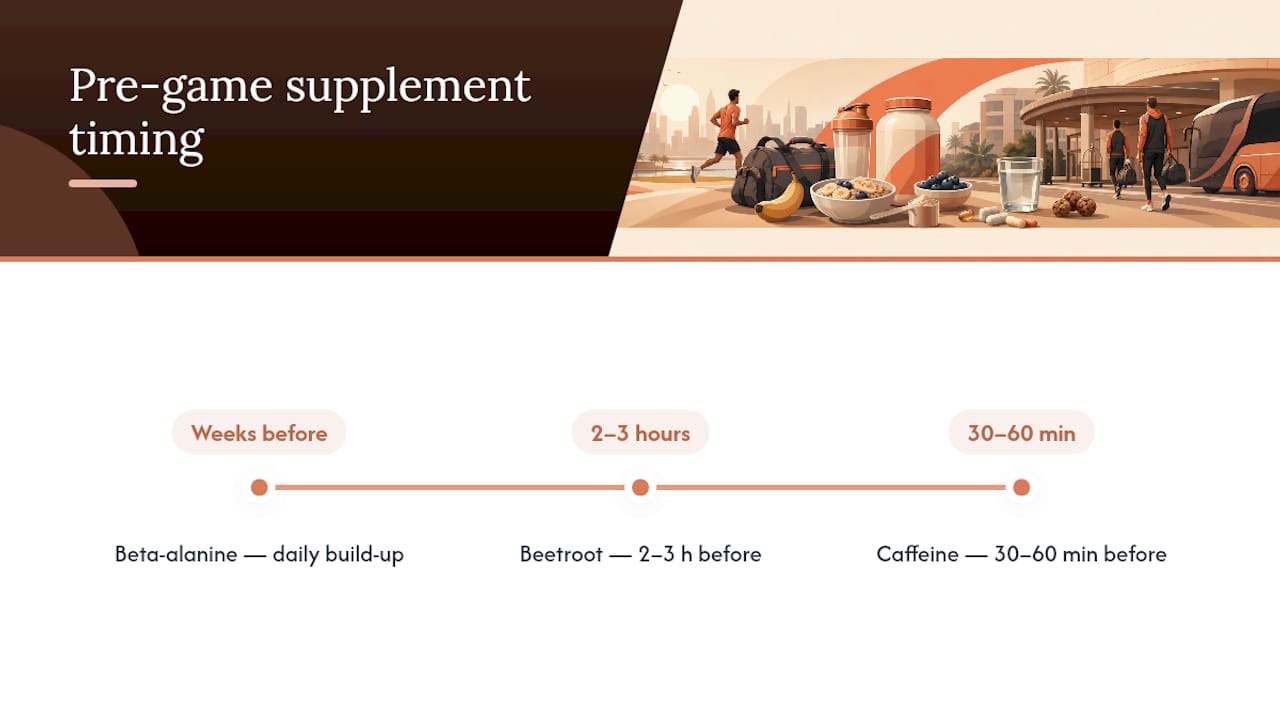
None of these aids should be introduced for the first time on competition day. If an athlete wants to try caffeine, beta-alanine, or any supplement, the testing window belongs in practice, alongside every other element of the pre-game routine. A sports dietitian or team physician should weigh in before any new supplement enters the rotation, particularly for younger athletes or those under any competitive drug-testing policy.
A Practical Takeaway
Test every meal and snack in training long before it matters on game day, and loop in a sports dietitian when the plan needs fine-tuning. Getting the hospitality right protects an athlete’s routine, and a protected routine is what lets talent actually show up on the field.
Bespoke Athlete Catering and Hydration Stations
Building your own meal and hydration schedule works well for an individual athlete with a supportive coach or parent tracking the details. Teams, tournaments, and high-net-worth athletes traveling with an entourage often need something more managed, and event production companies can provide a different route to the same result.

Some event production companies design bespoke pre-game catering, staffed hydration stations, and private-chef menus for teams and individual athletes who need every timing window covered without anyone on staff having to run the logistics themselves. That includes coordinating with catering partners like RĀW Superfood Café for performance-minded menu sourcing, and working alongside operations partners such as Jubiliq to keep same-day execution tight across staggered game times. Our hydration station designs build labeled, allergen-aware service directly into the athlete experience, and our anti-inflammatory menu planning extends the same fueling philosophy into recovery.
If your team, family, or organization is planning a tournament weekend or a season of home games and wants hospitality that runs itself, visit Bonnie Rae to start a conversation about your event calendar.
Sources
This article is general information, not a substitute for advice from a qualified doctor. Consult a qualified healthcare professional about your own circumstances before acting on anything here.
Recommended
Comments