
Hosts: 3 Things That Make Nonalcoholic Luxury Cocktails Worth $18 a Pour
- 1 day ago
- 11 min read
A luxury non-alcoholic cocktail is defined by three things: production pedigree, deliberate technique, and presentation that matches an $18 pour. That means reserve-tier bottles like French Bloom or Copenhagen Sparkling Tea, crafted mocktails built on shrubs and verjus, and tea-based sparklers designed to stand in for wine at the table. Start by choosing one of those three lanes, then match it to the occasion.
TL;DR:
Reserve-tier non-alcoholic wines and spirits, like French Bloom and Lyre’s, achieve luxury status through sourcing, production, and presentation comparable to alcoholic counterparts.
Proper serving portions of 3 to 4 ounces per course and matching glassware are essential to convey the same confidence and premium experience as alcoholic drinks.
Key techniques such as shrubs, verjus, and botanically infused NA spirits develop the dryness, structure, and weight crucial for a luxury non-alcoholic cocktail.
Pairing strategies focus on acidity, tannin, carbonation, and calibrated sweetness to mimic wine-like effects and elevate fine dining experiences.
Building a high-quality NA program requires deliberate planning in sourcing, staff training, presentation, and menu design to meet guest expectations at upscale events.
Table of Contents
What Counts as Non Alcoholic Luxury Cocktails: A Curated Shortlist
The Fine-Dining Logic Behind Pairing Non-Alcoholic Cocktails
Sourcing Ingredients and Brands for a Premium Zero-Proof Bar
Customizing Signature Non-Alcoholic Cocktails for Guest Preferences
Why This Category Deserves Serious Planning, Not an Afterthought
What Counts as Non Alcoholic Luxury Cocktails: A Curated Shortlist
The category has moved well past fruit juice in a coupe glass. Reserve-tier producers now bottle non-alcoholic wine and spirits with the same intent as their alcoholic counterparts, and bartenders build crafted mocktails using the same acid, sugar, and bitterness logic found in a proper cocktail program. Here is where to start—whether you are buying bottles for a private bar or briefing a bartender on signature builds.
French Bloom — A reserve-tier sparkling non-alcoholic wine from France, positioned and priced like a serious Champagne alternative. It qualifies as luxury through varietal sourcing and a de-alcoholized production process built to preserve texture, not just fizz.
Copenhagen Sparkling Tea — A tea-based sparkling pour made from cold-brewed tea and fermented like traditional sparkling wine. Its dry, mineral finish makes it a credible substitute at a formal table setting.
BOLLE — A premium Italian sparkling option built around botanical infusions rather than juice concentrates, with bottle presentation designed for ice buckets and formal service.
Kolonne Null — A German producer known for spirit-style bottles (gin and aperitivo analogs) built for stirred, spirit-forward serves rather than sweet mixers.
Lyre’s — A widely stocked non-alcoholic spirits brand with a recipe library of more than 100 cocktail builds, useful when a private bartender needs a tested starting formula.
A smoked amaro spritz — A crafted cocktail concept using a bittersweet NA amaro analog, soda, and a smoked orange peel, built to read as a digestivo course.
A verjus and shrub sour — A signature build using unripe grape juice acidity and a fruit vinegar reduction to mimic the dryness of a whiskey sour without any spirit at all.
Each of these earns “luxury” status the same way an alcoholic bottle does: through sourcing story, finish, and the confidence to serve it without apology.
The Fine-Dining Logic Behind Pairing Non-Alcoholic Cocktails
Sommeliers pairing zero-proof pours with a tasting menu rely on four mechanisms that used to belong to wine alone.
Acidity replaces the cutting effect of alcohol against fat and richness, which is why a citrus-forward or verjus-based pour works with butter-heavy sauces.
Tannin and astringency, sourced from tea, grape skins, or oak-aged NA spirits, stand in for the structure a red wine would normally provide next to red meat.
Carbonation lifts richness the same way Champagne does, which is why sparkling tea gets poured with shellfish and raw courses.
Sugar calibration keeps a pour from tasting like dessert too early in a meal, a common mistake when hosts default to juice-based mocktails.
Restaurants applying this logic to non-alcoholic pairing in fine dining typically pour 3 to 4 ounces per course, matching wine-pairing portions rather than serving a full cocktail alongside every plate. A dry sparkling tea poured with oysters, or a smoky pu-erh reduction served alongside duck, signals the same intentionality a sommelier brings to a wine list. That portioning also carries a pricing signal: a 3-ounce pour priced like an afterthought undercuts the whole presentation.
The Techniques Behind Layered, Adult Zero-Proof Drinks
Sweetness is the easy part of a mocktail. Dryness, finish, and weight on the palate are what separate a luxury build from a fruit punch, and those come from a specific technique set.
Shrubs and fruit vinegars build structure and a long, dry finish, which is the exact texture most NA cocktails are missing when they taste “flat.”
Verjus or drinking vinegar simulates the bite of a spirit’s alcohol burn, without heat, giving a stirred drink the same mouthfeel as its boozy counterpart.
Botanical NA spirits now split into three working categories: aperitif-style (bitter, low-sugar), spirit-forward (barrel-aged analogs for stirred drinks), and amaro-like (digestivo replacements with real bitterness).
Finishing techniques like bitters, a flash of smoke, or chemesthetic botanicals such as ginger and turmeric add the tingling, warming sensation that alcohol normally provides. Formulators increasingly design these ingredients around the specific drinking occasion, not just flavor.
Pro Tip: Build your NA cocktail’s acid and bitterness first, then add sweetness last, in small increments. Most home mixologists over-sweeten early and end up with a drink that reads as juice no matter how good the base spirit is.
Service and Presentation Checklist From Bonnie Rae
A non-alcoholic program only reads as luxury when the service around it matches the bottle. Beverage programs for zero-proof pours require the same careful approach as full bar service, because guests notice the gap immediately when they don’t.
Staffing ratio: one bartender per 35 to 50 guests keeps pour quality consistent and prevents the rushed, watered-down builds that happen when a single station gets overwhelmed.
Cork-and-foil service for reserve-tier bottles like French Bloom or Copenhagen Sparkling Tea, poured tableside rather than pre-batched into pitchers.
Correct glassware for the format: flutes for sparkling tea and reserve wine, coupes or rocks glasses for stirred spirit-forward builds.
Portion discipline at 3 to 4 ounces for paired courses, with full 6-ounce pours reserved for standalone cocktail hour service.
Menu language and pricing posture that signal premium positioning rather than apologizing for the absence of alcohol; guests read confidence in the price point.
Operators applying this posture have seen non-alcoholic additions to menus grow significantly year over year, with reserve pours often priced at 85 to 100 percent of their alcoholic equivalents. Bonnie Rae’s bar setup guidance for UHNW events applies that same ratio and ceremony to private engagements, and our bartender-to-guest ratio breakdown covers exactly why understaffing is the fastest way to undercut a premium bar program.
Quick Elevated Recipes to Make or Commission
These builds give a private bartender or a confident host a reliable starting point, each with ratios rather than vague measurements.
Sparkling tea spritz — 4 oz Copenhagen Sparkling Tea, a dash of grapefruit bitters, garnished with a twist. Method: build in a flute, no shaking required.
Stirred spirit-forward riff — 2.5 oz Kolonne Null (or comparable NA gin analog), 0.5 oz dry vermouth alternative, orange bitters. Method: stir over ice, strain into a chilled coupe, garnish with a lemon twist.
Shrub highball — 1.5 oz raspberry shrub, 4 oz soda water, a mint sprig. Method: build over ice in a highball glass, stir once to combine.
Verjus sour — 2 oz verjus, 0.75 oz simple syrup, egg white or aquafaba for texture. Method: dry shake, then shake with ice, double strain into a rocks glass.
Amaro-style nightcap — 2 oz NA amaro analog, a dash of orange bitters, served neat over one large ice cube. Method: stir gently, garnish with dehydrated orange.
Adaptogenic relaxation pour — 3 oz functional botanical base (lion’s mane or L-theanine formulated tonic), 1 oz tart cherry shrub, soda top. Method: build over ice, a favorite for wind-down service late in an evening.
Garnish choices matter more than most hosts assume. A dehydrated citrus wheel or a single edible flower reads as intentional; a plastic straw and a wedge of lime reads as an afterthought.
Why Luxury Non-Alcoholic Cocktails Are Having a Moment
The category’s rise did not happen overnight. A decade ago, “non-alcoholic cocktail” meant a mocktail built from leftover juice and grenadine, served as a courtesy rather than a real menu item. That changed as consumer habits shifted toward moderation without sacrifice, and beverage producers began treating sobriety-curious drinkers as a serious market rather than an afterthought.
Reserve-tier bottles changed the conversation first. When producers began de-alcoholizing wine through processes designed to preserve texture and aroma, rather than simply stripping alcohol from a finished product, the resulting bottles stopped tasting like compromise. Sparkling tea brands pushed the category further by giving sommeliers a genuinely wine-like pairing tool, and outlets covering the fine-dining beverage world have noted how tea-based sparklers now hold their own against Champagne on serious wine lists.
What is driving adoption now is guest expectation, not just supply. Athletes managing performance, executives protecting early mornings, and hosts who simply want every guest served with equal intention have made a zero-proof program a baseline expectation at high-end events, not a special request. That expectation is precisely why staffing and presentation for these pours now deserve the same planning rigor as a full bar program.
Sourcing Ingredients and Brands for a Premium Zero-Proof Bar
Quality control starts with the base spirits and mixers, not the garnish. Reserve-tier NA spirits like Lyre’s, Kolonne Null, and BOLLE are formulated with the same barrel-aging, distillation, or botanical-infusion processes used in their alcoholic counterparts, which is why they hold up in a stirred cocktail rather than falling apart into flat syrup.
For fresh components, a private bartender should source shrubs and verjus from small-batch producers rather than mass-market bottlers. The acidity and finish of a good verjus varies significantly by grape variety and harvest timing, the same way wine grapes do, and that variation is what gives a signature cocktail its identity rather than a generic tang.
Sparkling categories deserve particular scrutiny before a bottle goes on a private bar. Copenhagen Sparkling Tea and French Bloom both publish their production methods, which matters because a de-alcoholized process built for texture preservation produces a fundamentally different mouthfeel than a juice concentrate carbonated in a tank. Reading a producer’s own process notes before committing to a case order saves an embarrassing tasting later.
Independent testing helps close the gap between marketing copy and what actually performs at a bar. Serious Eats tested 20 nonalcoholic spirits and apéritifs before narrowing the field to seven standouts for sipping and pairing, a useful cross-check before committing a bar program to any single bottle.
Customizing Signature Non-Alcoholic Cocktails for Guest Preferences
A signature build should reflect the guest list and the occasion, not a generic template pulled from a recipe card. Start with the base: an athlete-focused event might lean on adaptogenic and electrolyte-forward builds that support recovery, while a corporate dinner benefits more from a spirit-forward stirred cocktail that reads as sophisticated rather than restorative.
Theme customization works best when it borrows from the menu rather than fighting it. A dinner built around Southeast Asian flavors pairs naturally with a lemongrass and verjus cooler; a steakhouse menu calls for something closer to the amaro-style nightcap, with real bitterness to cut through richness. Matching botanicals in the drink to spices already on the plate keeps the whole evening feeling designed rather than assembled.
Guest preference data matters more here than in a standard cocktail program, since dietary restrictions, sobriety motivations, and flavor preferences vary widely among people opting for zero-proof drinks. Some guests want a build that mimics a specific spirit closely; others want something that reads as its own category entirely, with no pretense of replacing alcohol. Asking a house manager or event planner to gather that detail ahead of time, the same way a chef gathers allergy information, turns a generic mocktail into a genuinely personal signature drink.
Common Challenges in Balancing Non-Alcoholic Cocktails
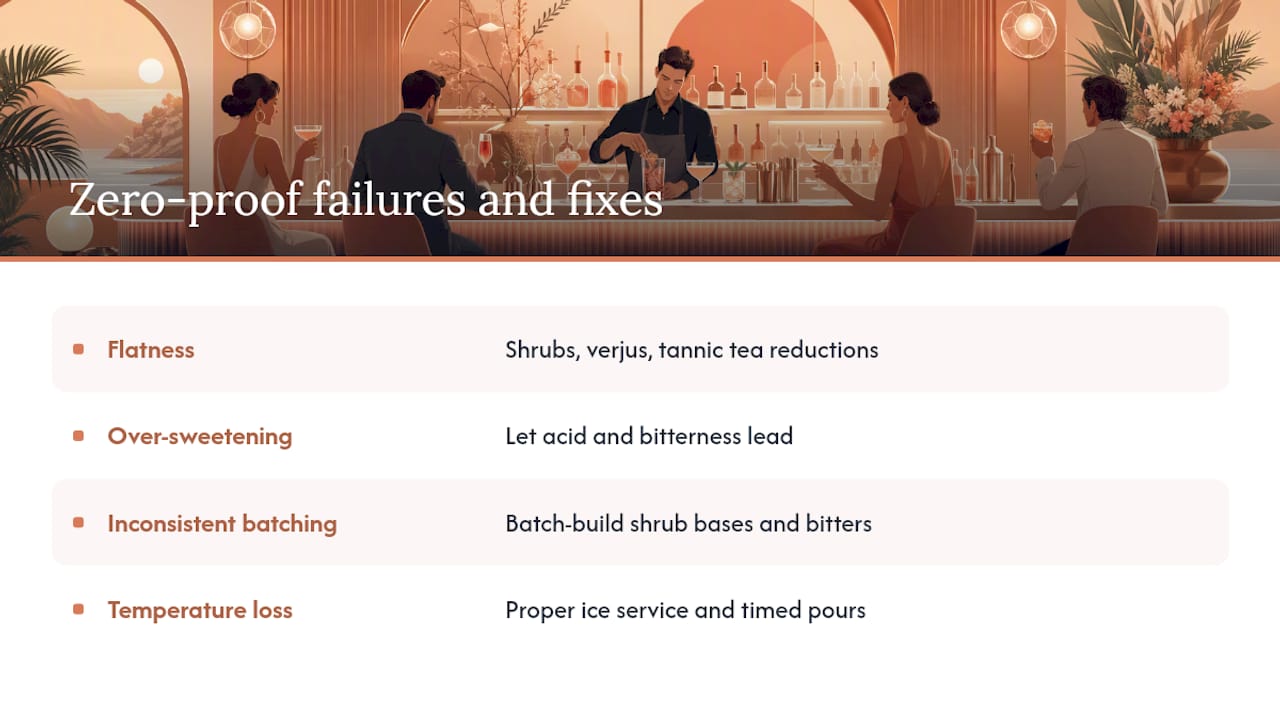
The most common failure in a zero-proof build is flatness: a drink that tastes correct in concept but falls apart on the palate because it lacks the weight alcohol normally provides. Shrubs, verjus, and tannic tea reductions solve this by adding structure, but bartenders new to the category frequently skip that step and rely on sugar alone to carry the drink.
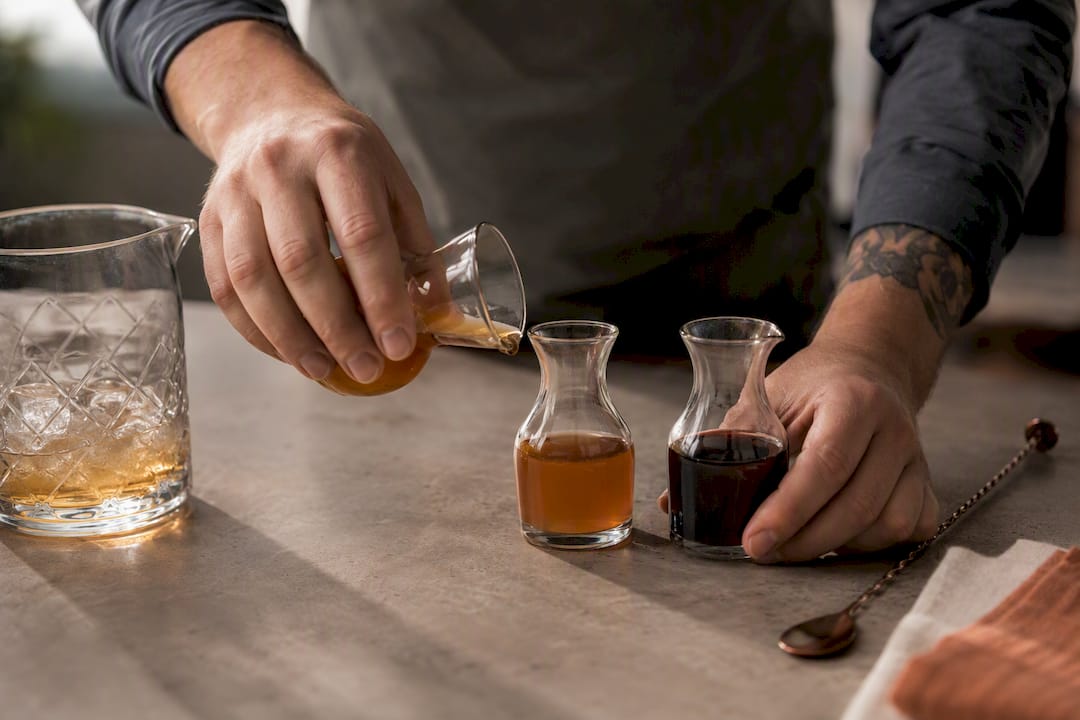
Over-sweetening is the second recurring problem, and it stems from treating every NA cocktail like a dessert instead of a savory-adjacent pour. A build that leans too sweet exhausts the palate before the third course, which is precisely why acid and bitterness need to lead the recipe rather than follow it.
Consistency across a large guest count presents a third challenge. Batch-building shrub bases and bitters blends ahead of an event, rather than building each drink from scratch under pressure, keeps quality even whether the bartender is serving the fifth guest or the two-hundredth. Bonnie Rae builds this kind of pre-batching directly into event production planning, the same discipline applied to a full-proof bar, because a guest at hour four should get the same drink as a guest at hour one.
Temperature control rounds out the list of quiet failure points. Sparkling tea and reserve wine analogs lose their structure fast once they warm past cellar temperature, so proper ice service and timed pours matter as much as the recipe itself.
Pairing Non-Alcoholic Cocktails With Upscale Cuisine
A cohesive dining experience treats the beverage program as part of the menu, not a separate afterthought handled by a different team. That means involving a beverage director or bartender in menu planning early enough to build pairings around specific courses, the same way a sommelier would build a wine list.
Rich, fat-forward courses call for high-acid pours, whether that is a verjus-based cooler or a citrus-heavy shrub highball, to cut through butter and cream sauces the way a crisp white wine would. Grilled or charred proteins pair naturally with something tannic, which is where a tea-based sparkler or an oak-influenced NA spirit earns its place at the table.
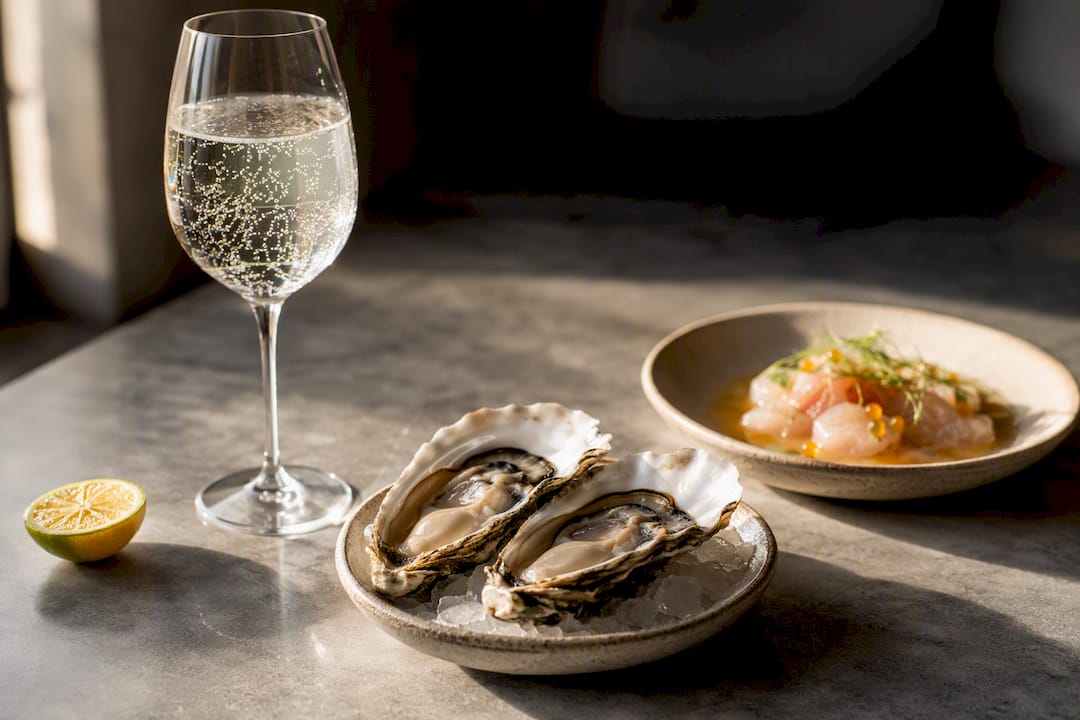
Raw and delicate courses, like crudo or oysters, benefit from carbonation and minerality rather than sweetness, making a dry sparkling tea or a mineral-forward sparkling wine analog the more natural choice than a fruit-forward cocktail. Dessert courses are the one place where sweetness can lead, provided the pour still carries enough acid to avoid feeling cloying against a rich finishing course.
A venue like ASSAIA in Brooklyn illustrates how a fine-dining room can build ceremony around every pour, alcoholic or not, treating a non-alcoholic beverage list with the same seriousness as its wine program. That posture, applied consistently across a tasting menu, is what actually makes a zero-proof pairing feel intentional rather than improvised.
Why This Category Deserves Serious Planning, Not an Afterthought
Guest expectations have shifted permanently, and that shift changes how a host should think about menu design, staffing, and pricing posture for any private event. A non-alcoholic program built with the same rigor as a full bar, right down to portioning and glassware, tells every guest at the table that their experience matters equally.
That shift shows up directly in event design: menu copy that treats a reserve-tier pour with real language, staffing ratios that hold up under volume, and presentation that matches the price point. Bonnie Rae builds beverage programs for private, corporate, and celebrity clients with that exact standard, drawing on the same hospitality trends shaping events we track across every engagement.
— Bonnie Rae
If you’re planning a private event and want a beverage program built around this kind of deliberate, peer-priced non-alcoholic pairing, Bonnie Rae designs full-service hospitality experiences, from bar staffing to sommelier-style pairing menus, for clients who expect every detail to hold up under scrutiny. Browse our event portfolio to see how we’ve brought this level of ceremony to private dinners, athlete team gatherings, and executive events, and reach out to start a bespoke beverage proposal for your next occasion.
Sources
Recommended
Comments