
One Bartender per 35–50 Guests: Luxury Bar Setup for UHNW Events
A luxury bar setup is bespoke mobile bar production, not home-bar decor. It pairs curated beverage programs, vetted bartenders and often a sommelier with equipment built for uninterrupted service at private, celebrity, or corporate events. The minimum standard: a dedicated staff ratio suited to your guest count and format, plus wine expertise on hand for anything wine-forward. Engage a production partner early. Inventory sourcing, rare bottles, and rental logistics all move slower than most hosts expect.
TL;DR:
Staffing ratios should never exceed one bartender per 40 to 50 guests at a cocktail reception to prevent long lines and ensure quality service.
A high-end bar requires dedicated support staff, including a sommelier for wine-heavy events and a barback for restocking, especially when serving over 75 guests.
Beverage programs should tell a story aligned with the event’s theme, season, and guest profile, with operational details like temperature control and guest engagement prioritized by sommeliers.
The bar layout must optimize sightlines, circulation, and efficient glassware staging while incorporating brand or event branding without obstructing service flow.
Lead times of 90 days are crucial for sourcing rare bottles, booking vetted staff, and customizing props, with costs rising significantly if timelines are compressed below three weeks.
Table of Contents
Core Components of a Luxury Bar Setup
Every high-end bar begins with a decision about form. A modular bar suits ballrooms and tented receptions where flexibility matters most. A branded install works for corporate activations where the bar itself carries sponsor identity. A pop-up island fits garden estates and rooftop events where sightlines and mobility come first.
Beyond the structure, four categories need confirmation before anyone signs off on the plan:
Equipment and backup systems: commercial refrigeration, redundant ice supply, a POS or tablet system for corporate billing, and fully stocked speed rails.
Beverage inventory: signature cocktails built around the event’s narrative, premium spirits, a curated wine list, and nonalcoholic options crafted with the same care as the cocktail menu.
Service support: a dedicated garnish station, glassware counted per guest with a buffer for breakage, and mise en place finished before doors open.
Contingency stock: backup spirits and extra ice staged off-site in case service runs long.
Luxury mobile-bar operators built around handcrafted cocktails and presentation-forward service treat these components as inseparable. Skip one and the whole experience feels improvised.
How Many Bartenders Do You Need per Guest?
Staffing ratios make or break a luxury bar experience faster than any garnish or glassware choice. A single bartender working a 100-guest reception will always create a line, no matter how skilled they are.
The core roles: a head bartender or mixologist who owns the menu and pacing, a sommelier for wine-forward moments, a barback dedicated to restock, and a runner or floater who moves between stations during peak surges.
For practical planning:
Cocktail receptions: one bartender per 35 to 50 guests, depending on menu complexity.
Plated dinners with wine service: a sommelier plus one assistant per 30 to 40 guests keeps pacing tight and bottle management clean, according to industry staffing standards for private-event sommeliers.
Reception-style events: at least one sommelier or wine expert running stations, with one to two mixologists handling cocktails.
Events over 75 guests: a dedicated restock barback for every two bartenders, plus one floater to prevent the head bartender from becoming a bottleneck. Bonnie Rae’s own bartender-to-guest ratio guidance walks through this math in more depth.
Pro Tip: If your proposal shows one bartender for more than 60 guests at a cocktail reception, ask for a revision before you sign. That ratio guarantees a line by the second hour.
Watch for red flags: a single-bartender setup for any guest count over 40, no sommelier named for a wine-heavy dinner, or no restock coverage listed at all.
Building a Beverage Program That Tells a Story
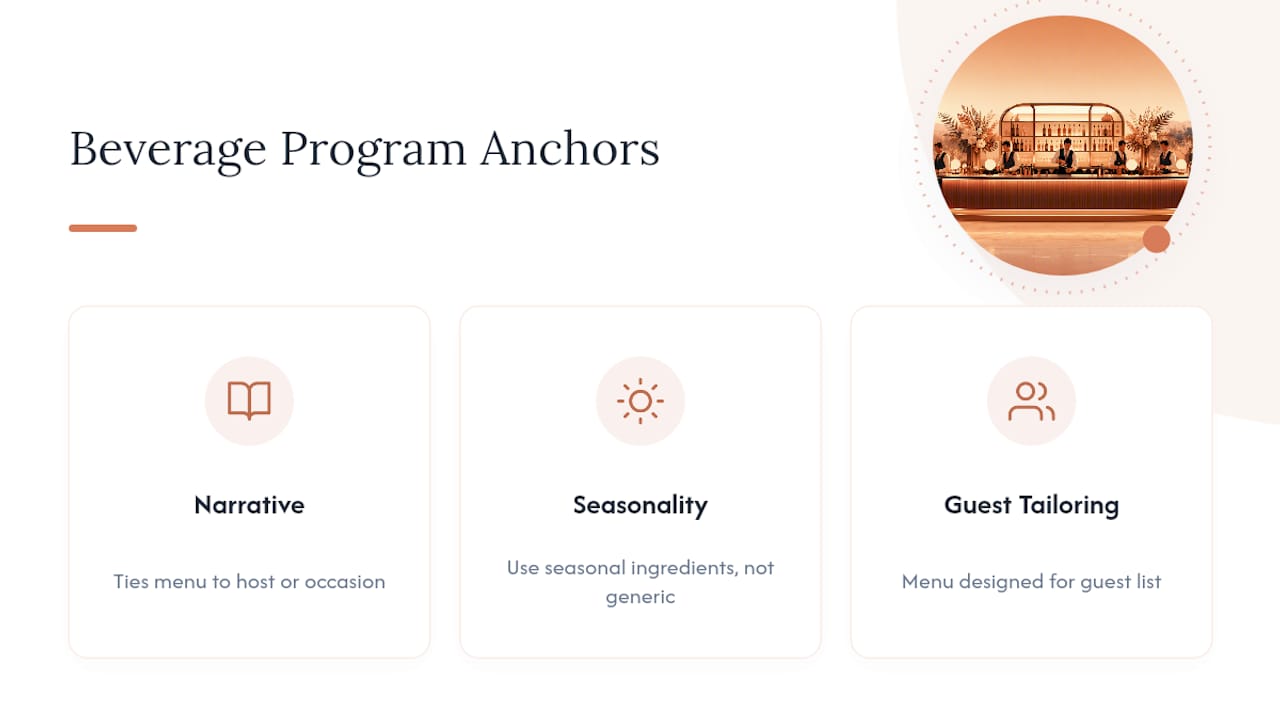
The best luxury bar programs read like a chapter of the event itself, not a standalone menu. Curation should follow three principles: a narrative that ties back to the host or occasion, seasonal ingredients that feel current rather than generic, and a menu tailored to the specific guest list rather than a house standard.
A sommelier earns their place well beyond pouring. Their real value shows up in serving temperature control, bottle rotation timing, and the kind of guest engagement and storytelling that turns a wine list into conversation. Clients often underestimate how much these operational details shape perceived quality at the table.
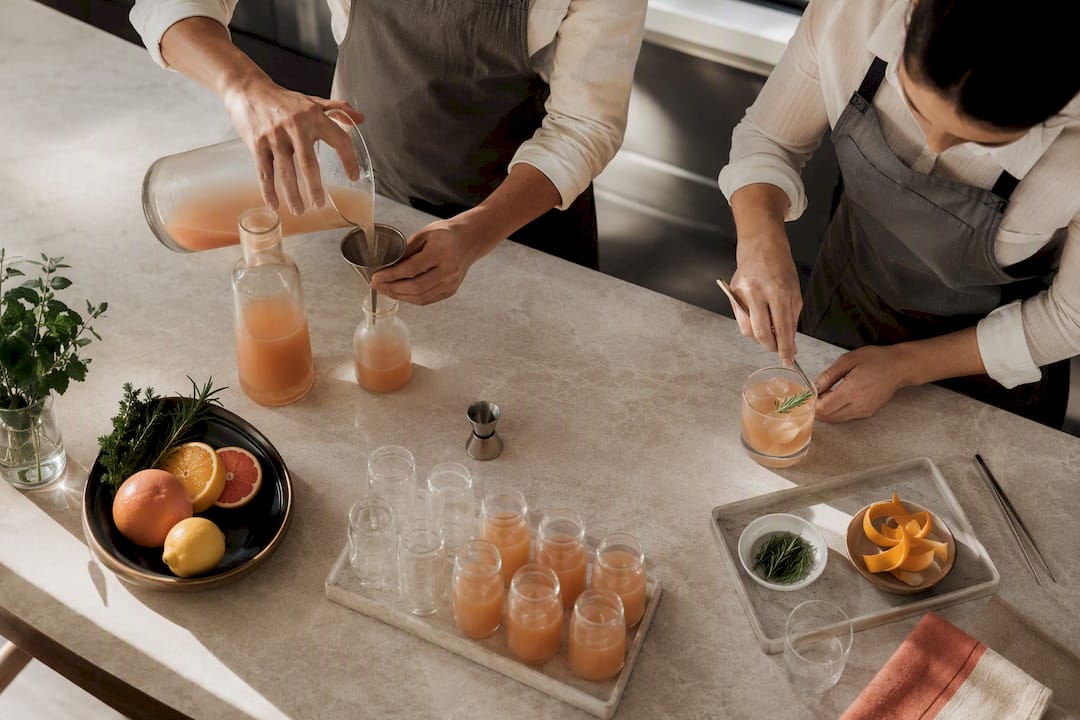
Signature-cocktail strategy comes down to two decisions: choosing two or three flavor pillars that anchor the whole menu, and deciding what gets batched ahead versus made to order in front of guests. For athlete clients or wellness-focused events, nonalcoholic programs deserve the same design attention as the cocktail list. Bonnie Rae’s hydration station guidance for competitive athletes covers this territory directly, and the tasting menu pairing approach shows how sommelier input should shape the pacing of a full dinner service.
Designing the Bar Footprint: Layout and Staging
Placement decides whether your bar feels like a destination or an obstacle. Position it to protect sightlines to the main event space while keeping circulation open enough that lines never form near a doorway or stage.
Establish the backbar display first. This is where bottles, glassware, and branded elements create the visual identity of the entire setup.
Confirm temperature control for both wine and spirits, since improper storage undermines even the best-sourced bottles.
Stage glassware in tiers so bartenders never turn away from the guest to search for a rock glass.
Build in a waste and wash plan that keeps used glassware moving without cluttering the service line.
Integrate brand or event theme finishes, such as florals or signage, without ever obstructing a bartender’s reach or sightline.
Run a technical checklist for power, water access, and a contingency plan if either fails mid-event.
A checklist built for corporate installs, covering load-in and staging power needs, offers a useful cross-check against your own vendor’s proposal.
Timeline, Logistics, and What Drives the Budget
Lead time protects your budget more than any single line item. A 90-day runway gives your production partner room to source rare bottles, book vetted staff, and build custom props without rush fees. Compress that window to under three weeks and costs climb across almost every category.
Primary cost drivers include:
Staffing scale and specialty roles, particularly sommeliers for wine-forward formats.
Rare or reserve bottle sourcing, which can carry its own procurement timeline.
Bespoke props, branded backbar builds, and custom glassware.
Travel and equipment transport for off-site or destination venues.
On the event day, logistics follow a clear arc: load-in and staging, a run-of-show that sequences beverage service around toasts or key moments, a restock cadence tied to guest flow, and inventory reconciliation before breakdown. Sommelier fees in particular vary by scope. Industry listings show different pay structures for wine-only presentations versus full open-bar duties, which is worth confirming line by line in any proposal.
Permits and liquor liability insurance fall under local jurisdiction and, on most bookings, your production partner’s responsibility to confirm and document before the event.
What to Include in Your Event Bar Briefing
A tight brief gets you comparable, comprehensive quotes instead of five proposals that can’t be measured against each other.
State your guest profile and service style, including plated versus reception format and any dietary or hydration needs.
Share your full schedule and venue constraints, including power access and load-in windows.
Ask vendors directly about their staffing plan, sourcing process for specialty bottles, and contingency plans for no-shows or equipment failure.
Request itemized deliverables: a full budget breakdown, staffing roster, setup diagram, and proof of insurance.
Confirm decision deadlines and payment structure, since most production partners require a deposit at signing and balance closer to the event date.
Bonnie Rae’s Founder Perspective: Where the Line Gets Drawn
Some production decisions are non-negotiable. Bonnie Rae’s founder holds firm lines on minimum staffing ratios, a full rehearsal before doors open, and secure, insured storage for any rare or reserve bottles on-site. These aren’t preferences. They’re what separates a polished event from a scramble.
The moments that noticeably elevate an event rarely involve more spending. They involve a sommelier who knows the host’s story well enough to tell it at the table, and a bar team briefed thoroughly enough that no guest ever notices the machinery behind their drink.
— Bonnie Rae
Book a Bespoke Luxury Bar Setup With Bonnie Rae
Bonnie Rae designs and staffs bespoke luxury bar setups from the ground up, pairing vetted bartenders and sommeliers with beverage programs built around your event’s story rather than a standard menu.
Booking starts with a proposal built around your specific guest count, venue, and vision, not a generic package. Expect a fully vetted staffing roster, on-site event management from load-in through breakdown, and post-event inventory reconciliation so every bottle and rental is accounted for. This production-led approach, where one team controls staffing, sourcing, and vendor coordination, protects luxury standards far more reliably than piecing together bartenders and rentals separately.
Browse past activations on the Bonnie Rae portfolio to see the range of formats already delivered, then start a conversation through Bonnie Rae’s booking page to request a bespoke proposal for your next event.
Sources
Recommended
Comments