
Plan Luxury Brand Pop Ups in 8–12 Weeks With a Practitioner's Runbook

Branded pop-up hospitality is a temporary, immersive activation where a brand becomes a host rather than a seller, staging a hotel stay, a chef’s table, or a skill-based ritual instead of a storefront. The value isn’t foot traffic. It’s the sequence a well-run activation triggers: deep guest engagement, first-party data capture, and a stream of user-generated content that keeps feeding the brand’s story long after the doors close. Choose this format when a brand needs emotional proximity to its most valuable guest, not just visibility.
TL;DR:
Branded pop-up hospitality focuses on creating emotional connections and capturing first-party data, often through participatory and sensory experiences.
Designing multisensory activations with signature scents, sounds, and tactile details enhances memory and engages luxury guests more effectively.
Operational success relies on standardized modular setups, early permit planning, and clear vendor coordination to ensure smooth execution and scalability.
Sustainability is integral, involving reusable materials, local sourcing, and waste reduction strategies that strengthen the brand’s luxury and thoughtful image.
Promotion should emphasize early digital discovery and user-generated content to fuel a self-sustaining flywheel and maximize organic reach.
Table of Contents
What Does Brand Pop-Up Hospitality Look Like in Practice?
Not every pop-up serves the same purpose, and confusing the formats is the fastest way to overspend on the wrong footprint. A short-stay pop-up hotel suits a brand trying to own an overnight experience: think a fashion house transforming three suites into a themed residency for a single weekend. A pop-up restaurant or kitchen works when the goal is culinary credibility, letting a brand test a concept in a real dining room without the multi-year lease risk that comes with a permanent location. Travel-lab installations compress a destination’s sensory signature (scent, sound, texture) into a feeder market, giving a brand a low-commitment way to convert curiosity into future bookings, a tactic Typsy’s research on experiential content frames as sampling before the sale. Workshop and skill activations, meanwhile, ask guests to participate rather than observe.
Each format answers a different business question:
Pop-up hotel: Can we own an overnight guest journey and command a premium for scarcity?
Pop-up restaurant or kitchen: Does this culinary concept deserve a permanent home, and does it earn buzz first?
Travel-lab installation: Can we move a destination’s identity into a market that can’t yet visit it?
Workshop or skill activation: Will guests remember us longer if they leave having learned something?
Duration and footprint follow the format. A hotel residency often needs three to seven days to justify staffing and press cycles, while a single-night culinary activation can run cleaner and tighter with far less overhead.
Why Do Luxury Brands Invest in Pop-Ups?
The return on a pop-up rarely shows up as a single sales spike. It shows up as a compounding content asset. A well-produced activation generates the kind of shareable, sensory footage that display advertising can’t buy, and Typsy’s analysis of experiential content calls this the content multiplier effect: physical moments convert into organic reach that lowers acquisition costs over subsequent campaigns.
Industry signal: EventTrack’s 2026 findings, summarized by Snapbar, show 84% of consumer marketers plan to increase event spend in 2026, with lead and data capture ranked as the top success metric brands track.
That data-capture priority changes how a pop-up should be designed from day one. Every reservation, tasting note, and RSVP is an opportunity to build a first-party contact list a brand actually owns, rather than rented ad impressions. Marketers should track a narrow set of outcomes rather than vanity metrics:
Volume and reach of guest-generated content tagged to the activation
Lead conversion lift among attendees versus a comparable digital campaign
Depth of engagement per guest, since experiential benchmarks consistently show live interactions carry more lasting influence than programmatic impressions despite a higher cost per contact
How Should You Design a Multisensory, Participatory Experience?
The single biggest design mistake in branded pop-up hospitality is treating it as a retail display with better lighting. Guests can tell the difference between a photo backdrop and a genuine hosted moment, and luxury guests especially will not forgive the former. Design principles need to start with the senses, not the signage.
Multisensory design matters because memory is encoded through sensation, not slogans. A brand that pairs a signature scent with a specific soundscape and a tactile detail (the weight of a glass, the texture of linen) builds a stronger associative memory than one relying on visual branding alone. This is the shift IMD’s research on luxury hospitality describes: brands are moving from selling objects to hosting participatory, skill-based moments that guests actively do rather than passively watch.
Programming should reflect that shift directly:
A private mixology session built around a signature cocktail, following the same logic that makes nonalcoholic luxury pours worth a premium
A chef-led culinary skills class rather than a passive tasting menu
A bespoke ritual tied to the brand’s heritage, such as a scent-blending session or a personalized monogramming station
A wellness-adjacent format, pairing a quiet, sensory-forward space with expert-led instruction
Pro Tip: Resist the urge to brand every surface. The strongest pop-ups encode brand values into the service choreography, staff scripting, and pacing of the visit, not just the wallpaper.
For deeper grounding in how sensory sequencing shapes a guest’s perception of quality, Wild Foodz’s guide to culinary experience design breaks down how travelers process taste, setting, and story together, a useful lens for any brand building a hospitality-first activation.
What Operational Standards Keep a Luxury Pop-Up Running Smoothly?
A luxury activation lives or dies on the parts guests never see. Building a repeatable operational spine turns a one-off event into a scalable program.
Standardize a modular footprint. Design displays, bar setups, and seating configurations that fit predictable square footage, so each new city or venue doesn’t require custom fabrication from scratch.
Set staffing ratios before booking the space. VIP lounge areas generally need a 25 to 30 square foot allowance per guest to preserve the sense of exclusivity, and bartender-to-guest ratios should be set well ahead of the final headcount, not adjusted the week of.
Coordinate vendors on a single production timeline. Florals, rentals, and culinary staff all need the same call sheet, not separate ones that assume the others will adjust.
Build a contingency plan for weather, staffing gaps, and supply delays, particularly for outdoor or destination activations.
On permitting: most temporary food activations in the United States require a Temporary Food Establishment filing tied to a specific menu and location, and that filing needs to happen well before opening night. Menus should be locked early, since late changes often trigger a re-filing and can delay approval. Local health departments vary in their exact timelines, so building in buffer weeks is far cheaper than a last-minute closure.
How Does the Discovery-to-Booking Flywheel Work?
The best-performing brand activations follow a five-step loop, and understanding it changes how you should promote the event before it even opens.
Digital discovery: A teaser, often from a micro-influencer or creator invited early, surfaces the activation online.
Social validation: Early attendees post, and their followers see a real person vouching for the experience, not an ad.
Booking with intent: A curated invite list or reservation system converts interest into a confirmed guest, ideally with contact data captured at booking.
Physical immersion: The activation itself delivers the sensory, participatory moment designed to be memorable and photograph-worthy.
New UGC: Guests leave with their own content, restarting the loop for the next wave of visitors.
Promotion should lean on creator nights and localized press previews rather than broad paid media, since experiential content performs best when it starts with a trusted voice rather than a banner ad. Track RSVP-to-attendance rate, UGC volume per guest, and lead capture rate as the three numbers that actually predict whether the flywheel is spinning.
What Does a Realistic Planning Timeline and Budget Look Like?
Most branded pop-up hospitality concepts need eight to twelve weeks from greenlight to soft launch, though a hotel residency or multi-city travel-lab often needs more.
Weeks 1 to 3: Concept lock, site selection, and initial vendor outreach.
Weeks 4 to 6: Permit filings, menu or program finalization, and staffing contracts.
Weeks 7 to 9: Production build, staff rehearsal, and marketing/creator outreach launch.
Weeks 10 to 12: Final walkthroughs, technology testing (RSVP systems, POS, data capture forms), and soft launch.
Budget typically breaks into four major categories: venue and permits, culinary and bar programming, production and rentals, and staffing. Culinary talent and bespoke bar programs tend to be the biggest swing line items, since Michelin-caliber chefs and sommelier-led programs command premium fees relative to a standard catering budget. A pop-up kitchen model remains one of the lower-risk ways to test a concept before committing to a permanent build.
How Sustainable Can a Temporary Brand Activation Be?
Sustainability in branded pop-up hospitality isn’t an afterthought bolted onto the design brief. It’s a legitimate constraint that shapes material choices, vendor selection, and even the length of the activation itself.
Start with the modular spine mentioned in the operational checklist above. A reusable set of displays, bar structures, and seating that travels from city to city doesn’t just save on fabrication costs. It keeps materials out of landfills between activations, which matters more for a brand whose luxury positioning depends on appearing thoughtful rather than wasteful. Renting furniture and decor instead of custom-building single-use pieces achieves the same goal while giving a brand more flexibility to change a look between markets.
Sourcing decisions carry equal weight. A culinary pop-up that leans on local, seasonal ingredients cuts transportation emissions and usually tastes better for it, since ingredients traveling shorter distances arrive fresher. Sommelier and bar programs can favor lower-intervention, sustainably farmed producers, which gives guests a story to share that goes beyond the brand’s logo.

Waste management deserves its own line item in the planning template. Composting food waste, using washable service ware instead of disposable, and partnering with venues that already have recycling infrastructure in place all reduce the environmental footprint of a single-weekend event. None of this requires sacrificing the polish guests expect. A thoughtfully sourced, low-waste activation often reads as more exclusive, not less, because scarcity and intentionality have always been part of luxury’s appeal.

Bonnie Rae’s Perspective on Building Hospitality That Lasts
The brands that get this right stop thinking of a pop-up as a marketing expense and start treating it as a hospitality product with a short shelf life. That distinction shapes every staffing and design decision Bonnie Rae makes for a client.
[Illustrative vignette outline: a fashion brand’s weekend residency, built around a single signature ritual, staffed by a small vetted team, generating content that outlasted the event itself.]
— Bonnie Rae
Ready to Bring a Branded Pop-Up to Life?
An alternative to piecing together vendors on your own is to have a single point of coordination handle venue scouting, catering, staffing, and the chef or sommelier program to make a luxury activation feel effortless instead of assembled. For discerning clients, that single-point coordination helps ensure the staffing ratios, permit timing, and modular design are executed smoothly by a team familiar with the operational details.
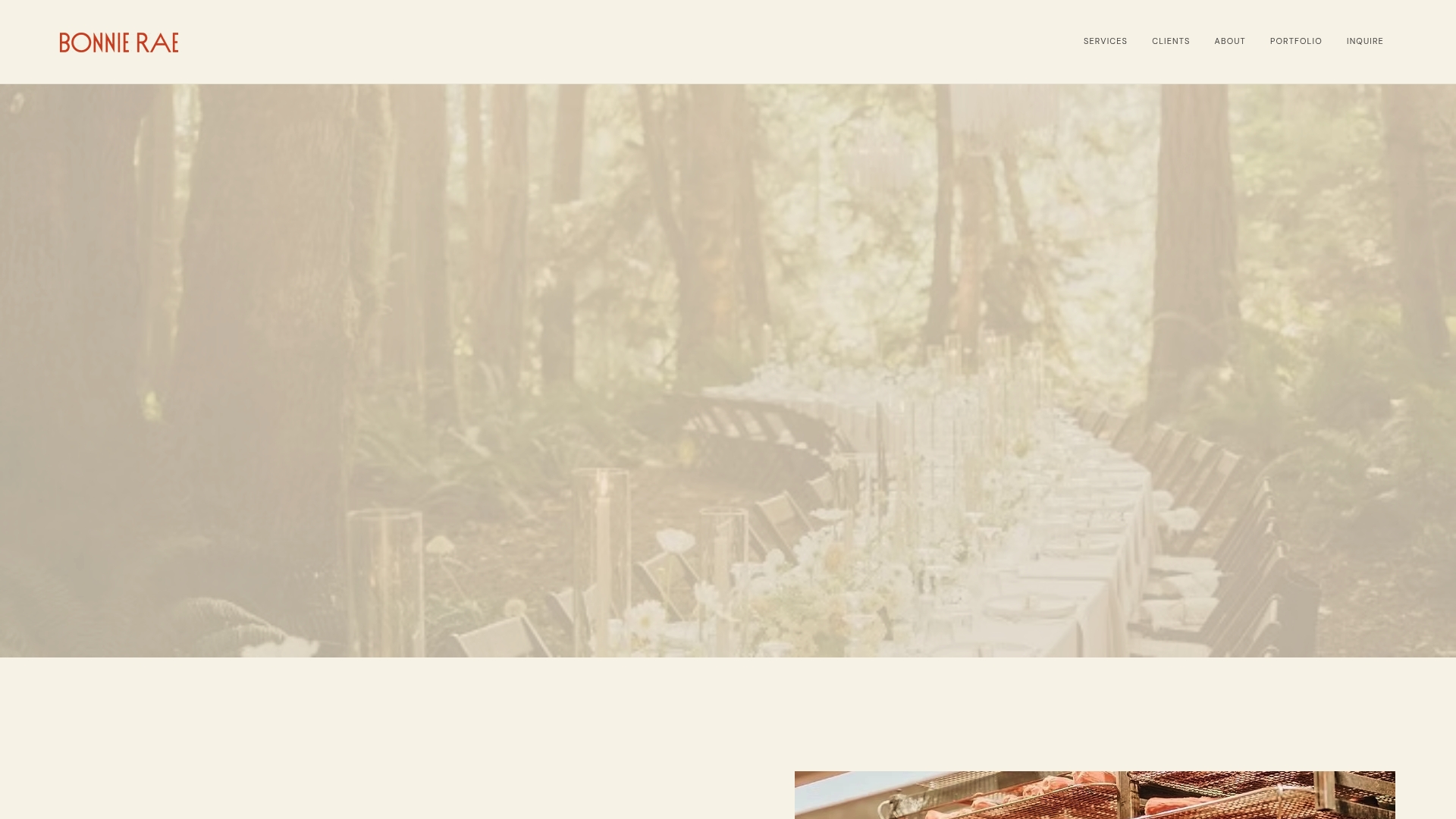
Whether the goal is a chef-led pop-up dinner, a brand installation, or a full residency experience, Bonnie Rae’s Full Event Production service covers the production, staffing, and hospitality design from first concept to final walkthrough. Request a proposal through Bonnie Rae’s site to start scoping dates, footprint, and programming for your next activation.
Sources
FAQ
What Are Some Examples of Pop-Up Restaurants?
Pop-up restaurants typically take the form of a guest chef residency inside an existing venue, a fully built temporary kitchen in a non-traditional space like a rooftop or gallery, or a brand-sponsored dining series tied to a product launch. Each model lets a culinary brand test a concept, as outlined in EHL Insights’ pop-up kitchen guide, before committing to a permanent location.
Do You Need a License to Run a Pop-Up?
Most temporary food activations in the United States require a Temporary Food Establishment permit tied to a specific menu, date, and location, filed with the local health department well ahead of opening. Requirements vary by jurisdiction, so confirming the exact timeline with the local health department early in planning avoids a last-minute filing delay.
What Are Pop-Ups For Brands?
Brands use pop-ups to create a hosted, immersive moment that builds emotional connection and captures first-party guest data, functioning as clienteling rather than a simple sales channel. They also act as a content engine, generating the kind of shareable UGC that Typsy’s research shows fuels ongoing organic reach at a lower cost than paid media.
Who Owns the Pop-Up Hotel Concept in an Activation?
The brand commissioning the activation owns the concept, story, and guest experience, while the physical space is typically leased or licensed for the activation’s duration from an existing hotel or property. Production partners, such as Bonnie Rae for ultra-high net worth and corporate clients, handle the execution, staffing, and hospitality design without taking ownership of the brand’s concept itself.
What Does Bonnie Rae Charge for a Pop-Up Activation?
Pricing for a branded pop-up activation depends on scope, duration, and programming, so Bonnie Rae builds a bespoke proposal for each client rather than publishing a flat rate. Current details on services are available directly through Bonnie Rae’s website.
Recommended
Comments