
Luxury Planners: Anti Inflammatory Event Menus, Results in 2–3 Weeks

An anti-inflammatory event menu builds every course around whole plants, omega-3 proteins, and unsaturated oils, while removing refined grains, added sugar, and seed oils entirely, as detailed in this Mediterranean Diet for Inflammation resource. Guests notice the difference immediately in flavor and, more importantly, in how they feel two hours after the last course. Harvard Health and Cleveland Clinic both point to measurable benefits, some noticeable within two to three weeks of consistent eating, making this menu approach as much a hospitality strategy as a wellness one.
TL;DR:
Using wild-caught fish, cold-pressed oils, and seasonal produce increases costs but yields the highest anti-inflammatory benefits, especially in protein and oils.
Menu swaps should focus on replacing refined carbs and processed meats with plant-based or whole grain alternatives to maintain anti-inflammatory integrity.
Flavor can be kept appealing through spice blends, umami-rich ingredients, and cooking techniques like roasting and grilling, rather than relying on fat and sugar.
Discreet labeling and subtle menu descriptions help guests understand the menu’s health focus without sounding clinical or compromising the celebratory atmosphere.
Building seasonal flexibility into the menu ensures year-round freshness, with produce swaps that align with the natural harvest cycle to keep offerings relevant and vibrant.
Table of Contents
Anti-Inflammatory Event Menu Checklist for Planners and Caterers
Before you touch a single recipe, get the ingredient logic straight. The pattern favors leafy greens, fatty fish, nuts, seeds, whole grains, and olive oil, and it limits red or processed meat, refined carbohydrates, added sugar, and seed oils. That’s the entire framework. Everything else is execution.
Three menu formats cover almost every luxury event brief you’ll receive:
Fast-casual: a build-your-own station with a grain or green base, an omega-3 protein, and bold dressings that do the flavor work.
Cookout or picnic: grilled fish or plant-protein skewers, roasted seasonal vegetables, and fruit-forward desserts instead of sugar-heavy sides.
Plated luxury: a composed, multi-course experience where every element, down to the sauce, is built on anti-inflammatory ingredients.
Before service, confirm sourcing priorities, finalize allergy labeling, brief the front-of-house team, and run a tasting with the client or their nutrition advisor. Success shows up in three places: guest feedback on satisfaction, a near-absence of post-meal sluggishness, and the percentage of menu items that actually meet the anti-inflammatory standard you set.
How to Build an Anti-Inflammatory Menu for Your Event
Converting an existing menu, or building one from scratch, follows a repeatable sequence. Skip a step and you’ll end up with a menu that looks the part but still carries hidden inflammatory ingredients.
Audit the menu. Read every recipe and vendor invoice line by line. Processed oils, added sugars, and refined flours hide in dressings, marinades, and pre-made sauces far more often than in the obvious dishes.
Build a swap matrix. Johns Hopkins Medicine recommends trading refined carbohydrates and processed meats for vegetable-forward alternatives. In practice, that means white rice becomes quinoa or brown rice, and mayonnaise made with seed oils becomes an avocado-oil emulsion or a yogurt-tahini blend.
Set plate composition rules. Half the plate should be vegetables or plants, protein gets a defined portion rather than a default oversized cut, and every plate includes a fiber-rich side to help stabilize blood sugar through the event.
Hand off to the kitchen properly. Update recipe cards with exact substitutions, brief line cooks on prep changes, and run a formal tasting and quality check with the chef, and the dietitian if one is involved, before the menu goes live.
Pro Tip: Rehearse mouthfeel, not just flavor, during tastings. Swapping butter for extra-virgin olive oil in a sauce changes texture and how it coats the palate, so taste the final plated dish, not just the sauce in isolation, before you call it approved.
The audit step catches the most expensive mistakes. A “healthy” vendor-supplied vinaigrette can carry more added sugar than the dessert course, and you won’t know until you read the label.
Three Sample Menus You Can Send to Clients Today
Each of these templates works for a different event scale, and each has been built with portioning, labeling, and sourcing baked into the structure.
Fast-casual station:
Base: baby kale or a farro and quinoa blend
Protein: grilled wild-caught salmon or citrus-marinated chicken
Toppings: toasted walnuts, pickled red onion, roasted seasonal vegetables
Dressing: turmeric-tahini or lemon-olive oil vinaigrette
Dessert: dark chocolate-dipped strawberries, grab-and-go
Cookout or picnic spread:
Grilled skewers: wild-caught swordfish or marinated portobello and halloumi for plant-forward guests
Sides: charred asparagus, herb-roasted sweet potatoes, a cucumber-dill salad in place of mayonnaise-based slaw
Dessert: grilled peaches with honey and pistachio, fruit-forward and low in refined sugar
Plated luxury tasting menu:
Starter: roasted beet and citrus salad with pistachio crumble
Main: herb-crusted branzino or grass-fed beef tenderloin with a parsley-caper gremolata
Accompaniment: charred broccolini and a saffron cauliflower purée
Dessert: olive oil cake with berry compote, sugar kept deliberately low
Every template needs a sourcing note (wild-caught fish, seasonal produce) and a clear allergy key on the menu card. Guidance on place card etiquette and meal codes is worth reviewing here, since discreet labeling matters as much as the food itself for high-profile guests.
What This Costs, and Where Time Gets Tight
Premium ingredients show up in specific places, mainly wild-caught fish, cold-pressed oils, and specialty flours, and those costs are real. But they’re also manageable if you know where to spend and where to save.
Cost control: Reserve the premium spend for the protein and the finishing oil; save on volume items like grains and roasted vegetables, which are inexpensive and inherently anti-inflammatory.
Throughput: Fast-casual formats need pre-portioned toppings and dressings staged in bulk; plated service needs sauces built in batches ahead of time so the line doesn’t slow down under pressure.
Sourcing: Build relationships with one or two seafood vendors who can guarantee wild-caught sourcing consistently, rather than chasing the lowest price event to event.
Staffing and labeling: Brief service staff on every substitution before doors open, and always run a tasting protocol for the host or principal before the final menu is locked.
Pro Tip: Negotiate seasonal produce contracts at the start of a planning cycle, not the week of the event. Off-season sourcing for the same ingredient can cost three or four times as much, and it shows up fast in a season with multiple bookings.
Flavor Techniques That Keep the Menu From Tasting “Healthy”
The biggest risk with an anti-inflammatory menu isn’t the ingredient list. It’s a bland plate that reads as a compromise instead of a genuinely well-crafted course. Private chefs working with high-net-worth households consistently lean on flavor-building technique, not fat and sugar, to make these menus feel indulgent rather than restrictive.
Spice blends: Turmeric with black pepper (which improves absorption), fresh ginger, and smoked paprika bring warmth and depth without a single gram of added sugar.
Umami builders: Parsley-miso vinaigrettes, slow-roasted tomatoes, and aged parmesan finish a dish the way butter used to.
Fermented condiments: A spoonful of good kimchi or a yogurt-based sauce adds acidity and complexity that cuts through richness.
Cooking method: Roasting, quick char on a grill, and braising in olive oil and broth all concentrate flavor while preserving nutrients better than deep frying or heavy sautéing in butter.
Finishing touches: Citrus reductions, nut-based crusts, and olive-oil emulsions replace cream-based finishes without losing richness on the palate.
Dessert: Dark chocolate, baked stone fruit, and toasted nuts do more work than a sugar-laden pastry ever could, and they photograph beautifully on a dessert course.
Bonnie Rae’s Practitioner Playbook for Event-Day Execution
A structured tasting process, including on-site adjustments and client sign-off after initial and follow-up tastings, ensures nothing feels improvised under pressure.
For athlete and executive clients, this often includes advance nutrition consultations, discreet labeling at the table, and contingency plates for last-minute dietary changes. This kind of coordination between hospitality and wellness advisors is increasingly the standard for UHNW anti-inflammatory dining, not the exception.
Accommodating Allergies and Restrictions Without Breaking the Menu
Anti-inflammatory principles and allergy accommodation overlap more than most planners expect. A menu already free of seed oils and refined carbs is halfway to gluten-free and dairy-conscious by default.
Start by building the base menu to satisfy the widest set of restrictions, then layer in individualized swaps rather than building separate menus from scratch. Gluten-free guests do well with quinoa, rice, or farro bases already central to the anti-inflammatory template. Dairy-free guests benefit from the same olive-oil emulsions and nut-based sauces the menu already favors. Nut allergies require more care, since walnuts, almonds, and pistachios show up constantly in anti-inflammatory cooking, so keep one nut-free protein and one nut-free dessert ready at every event.
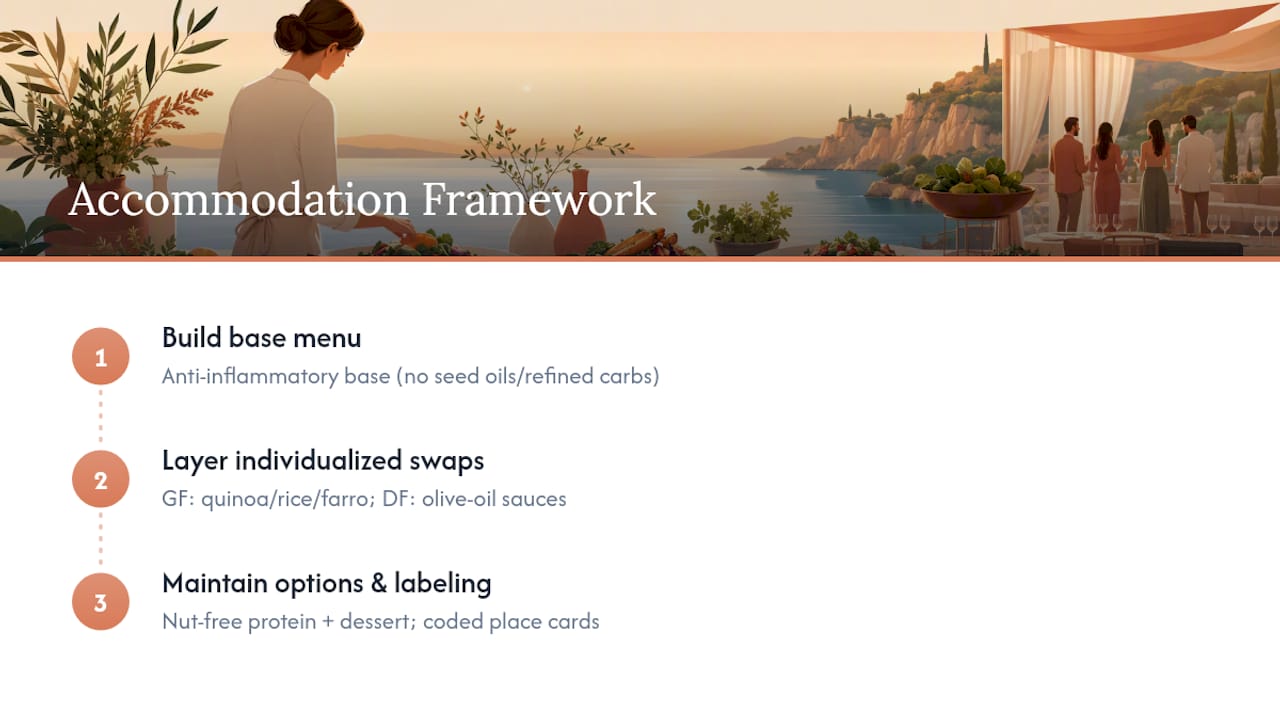
For guests managing diabetes or on GLP-1 medications, portion control and steady protein distribution across courses matter more than any single ingredient swap. Smaller, more frequent courses with consistent protein rather than one large starch-heavy plate tend to serve these guests better, and a quiet conversation with the host’s office ahead of time lets you build that in without singling anyone out. Discreet, coded labeling on place cards, rather than public menu disclaimers, keeps the accommodation dignified. Every substitution should still route through the same tasting protocol the main menu uses, so quality never drops for the guest who needs the swap.
Beverage Pairings That Support the Anti-Inflammatory Menu
Beverages either reinforce an anti-inflammatory menu or quietly undo it, and sugar is usually the culprit. Cocktails loaded with syrups and juices from concentrate, and sodas served alongside a carefully built plated dinner, work against everything the kitchen just did.
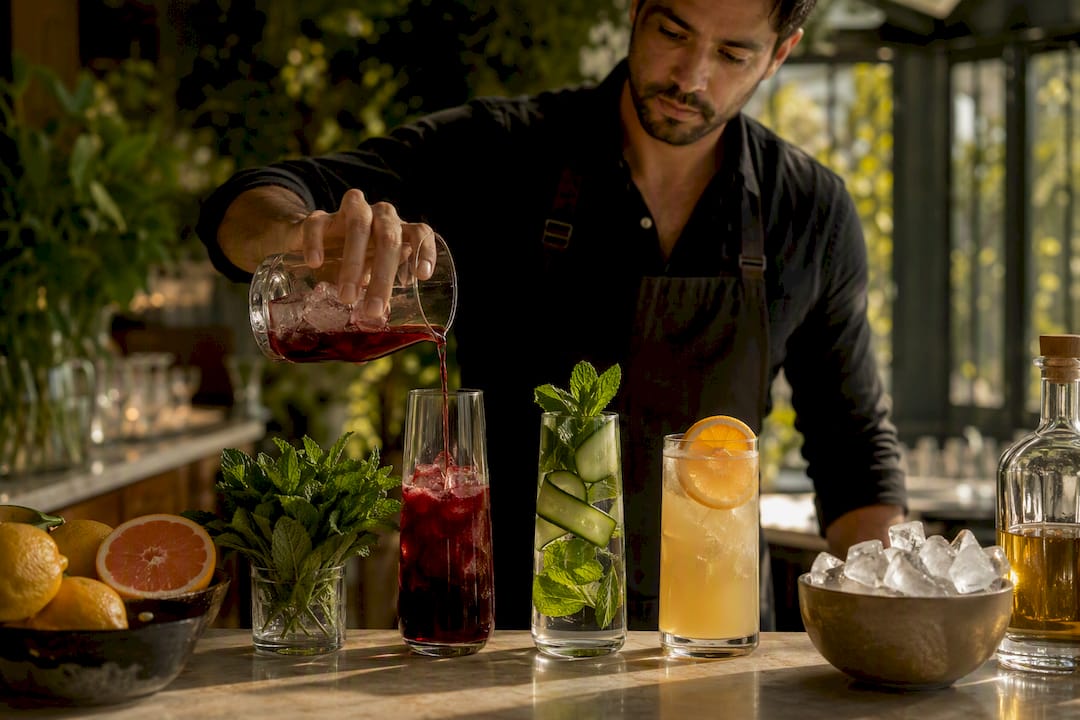
Herbal teas, particularly ginger, turmeric, and hibiscus blends, pair naturally with both fast-casual and plated formats and can be served hot or over ice depending on the season. Infused waters built around cucumber, mint, citrus, and berries give guests something visually elegant that doesn’t carry a sugar load. For cocktail programs, a sommelier or bar director can build low-sugar options around fresh citrus, muddled herbs, and quality spirits rather than pre-made mixers. Sparkling water with a citrus or herb garnish makes an easy non-alcoholic option that still feels intentional rather than an afterthought. An approach to wine pairing for tasting menus applies the same logic here: the beverage should complement the course, not compete with the kitchen’s work on inflammation.
Getting Guests on Board Without Sounding Clinical
Guests respond better to a menu framed around flavor and provenance than one framed around health claims. Nobody wants to feel like they’re at a wellness retreat when they came for a celebration.
Menu cards work best when they describe the dish, not the diet philosophy: “wild-caught salmon with turmeric-tahini dressing” reads as a menu item, while “anti-inflammatory salmon” reads as a lecture. If a host wants guests to understand the intent behind the menu, a brief verbal note from the chef or host at the start of the meal lands far better than printed messaging. Staff briefed on the ingredient story, ready to answer a curious guest’s question about the dressing or the sourcing, do more for guest education than any card on the table.
Seasonal Swaps That Keep the Menu Fresh Year-Round
An anti-inflammatory menu built around one season’s produce will feel dated the moment the calendar turns, so build in substitution logic from the start rather than reinventing the menu each quarter.
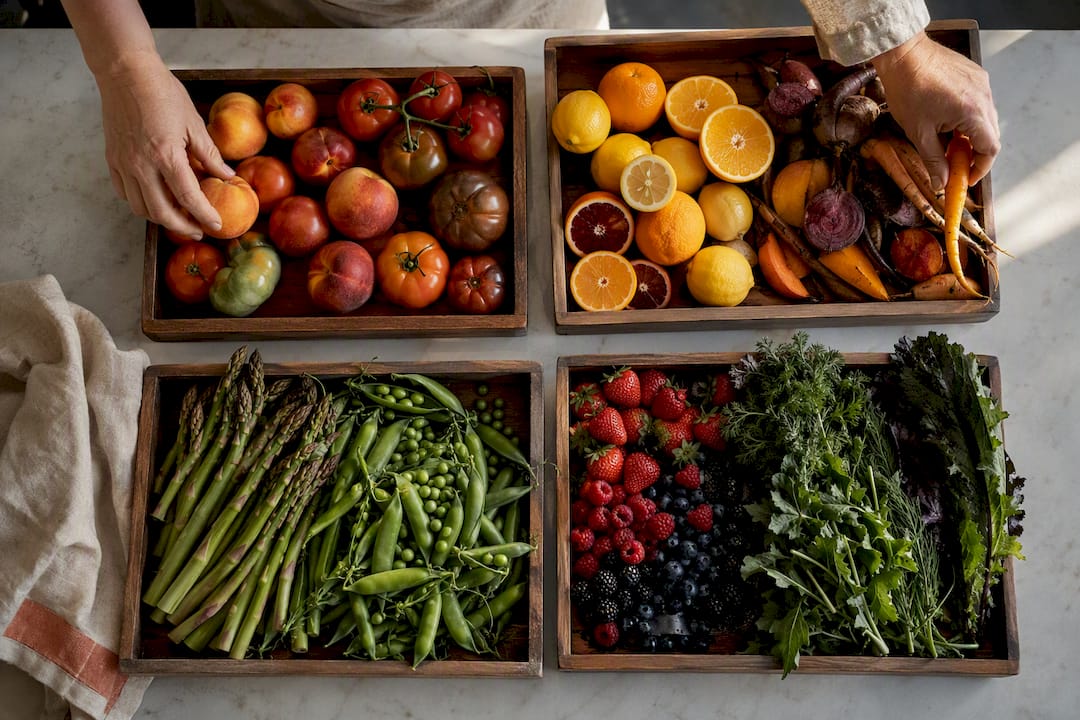
In late summer and early fall, stone fruit and heirloom tomatoes anchor the produce program. Winter shifts naturally toward citrus, roasted root vegetables, and hearty greens like kale and chard that hold up under braising. Spring brings asparagus, peas, and early berries back into rotation, replacing the roasted squash and Brussels sprouts that carried the menu through the colder months. Summer opens up the widest range, with stone fruit, berries, and lighter grilled preparations replacing the braises and purées that defined winter service. The protein and technique stay constant. Only the produce, and sometimes the dressing’s acid component, needs to shift with the season.
Why This Matters More Than Most Hosts Realize
Guest wellbeing and event ROI are more connected than most hosts assume. A guest who leaves an event energized, rather than sluggish, remembers the evening differently, and that memory shapes whether they book you again or recommend you to their circle. One recent tasting for a plated dinner drew unprompted praise specifically for how guests felt the next morning, not just what they ate the night before.
— Bonnie Rae
Work With Bonnie Rae to Design Your Anti-Inflammatory Event Menu
This service is an option for hosts who want a fully managed anti-inflammatory menu program, not a checklist to execute themselves. The team coordinates menu design, private chef sourcing, and dietitian collaboration into a single process, so a host doesn’t have to translate wellness goals into kitchen instructions alone.

A typical engagement starts with a discovery call to understand dietary requirements, guest count, and event format, followed by a tasting where the client or their nutrition advisor reviews every course before it’s locked. From there, sourcing, staff briefings, and on-site execution are handled so the only thing left for the host to do is enjoy the room. If you’re planning a private dinner, corporate gathering, or multi-day event that calls for this level of nutritional intention, start a proposal request to begin the process.
This article is general information, not a substitute for advice from a qualified doctor. Consult a qualified healthcare professional about your own circumstances before acting on anything here.
Sources
Recommended
Comments